A rotary gas meter, also called a rotary positive displacement (RPD) or lobe meter, measures gas with two counter-rotating impellers in a rigid chamber.

It suits commercial and industrial loads where flow changes widely during the day. The IM-RM on this page covers 0.5 to 1,000 m³/h in DN40 to DN150 (1½ to 6 inch), with design pressure up to 25 barg, for gas networks and industry in Saudi Arabia and the GCC: the UAE, Qatar, Kuwait, Bahrain and Oman.

Rotary Gas Meters: products
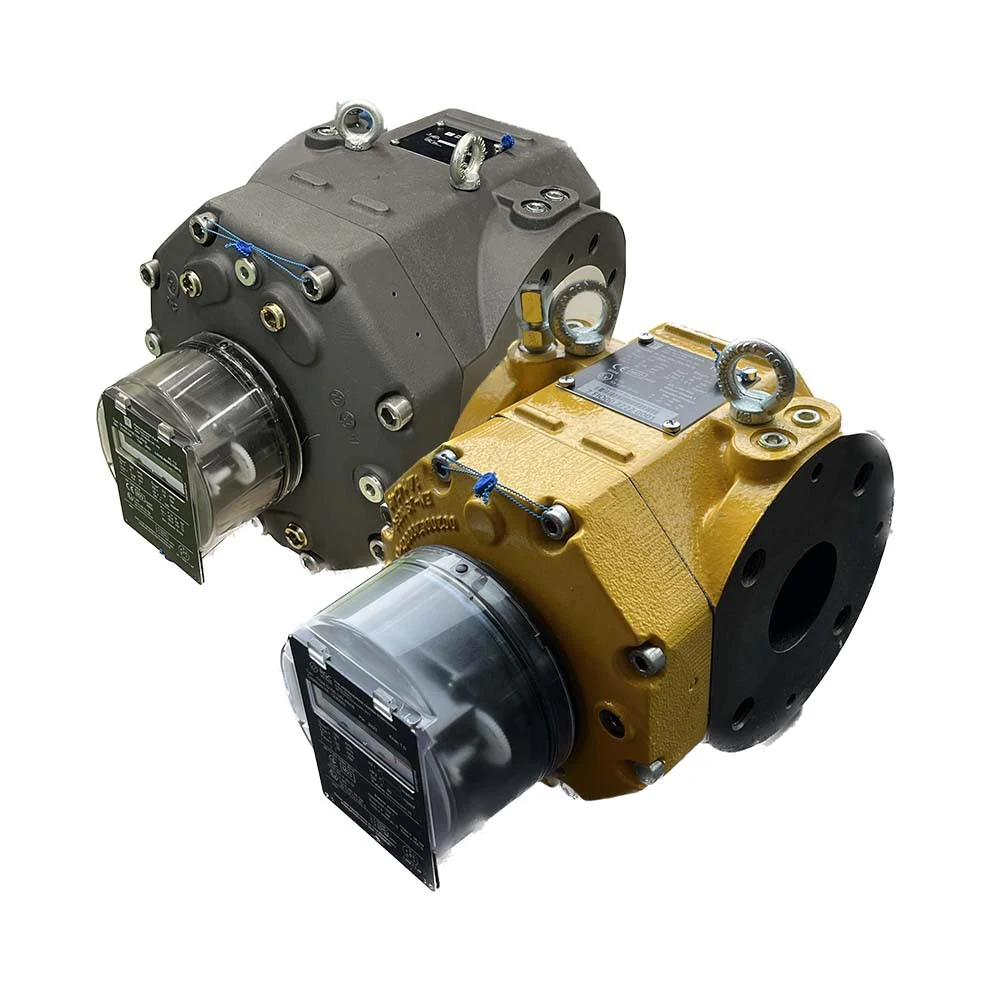
IM-RM rotary positive displacement gas meter by Pietro Fiorentini H2 Ready
Rotary Meter

IM-RM

Positive displacement rotary gas meter for industrial and commercial applications with wide flow range.

  • Flow Range: 0.5 - 1000 m³/h
  • Sizes: 1-1/2″ - 6″
  • Temperature: -25°C to +55°C
View Details

How to choose a rotary gas meter

  • Flow range and rangeability

    Size the meter so maximum and minimum load sit inside its range: the IM-RM measures 0.5 to 1,000 m³/h, rangeability up to 1:250, following a gas engine or industrial process from low to full load.

  • Body material and pressure

    Hard anodised aluminium (compact, light): design pressure up to 25 barg. Spheroidal graphite cast iron: 16 bar, or 5 bar in the HTR version for high temperature resistance to EN 12480 Annex C.

  • Flanges and gas

    Flanges are ANSI 150 to ASME B16.5 or PN16/25 to EN 1092-1. The gas must be filtered, dry and non-corrosive.

  • Billing approvals

    For billing, the IM-RM is designed to EN 12480 and OIML R137, certified under MID, PED and ATEX, and approved for custody transfer applications.

  • Index, outputs, converter

    The 8-digit index has two low frequency pulse outputs and an anti-fraud output and accepts an optical encoder or high frequency sensors. A Modus or Modus Slim2 volume converter corrects volume to base conditions.

  • Alternatives at higher flow

    For higher, steady flow or pressure above 25 barg, the IM-TM turbine meter (up to 100 barg) fits better; for 3 and 4 inch lines with no moving parts, compare the FioSonic Mini.

  • What to send us

    For district stations and industrial users in Dammam, Jubail or Abu Dhabi, send us the minimum and maximum flow, pressure and gas type.

Frequently asked questions

How does a rotary gas meter work?

Two precision-machined, lobed impellers turn in opposite directions inside a rigid measuring chamber. Each turn moves a fixed volume of gas from the inlet to the outlet, and synchronising gears keep the impellers in position. Because the principle is positive displacement, the IM-RM technical brochure states that accuracy is not affected by changes in gas specific gravity, pressure or fluctuating flow.

When should I use a rotary meter instead of a diaphragm meter?

The diaphragm meters on this site stop at G25 (40 m³/h) and 500 mbar. When a commercial or industrial load needs more flow or a higher pressure, a rotary meter takes over: the IM-RM starts at 0.5 m³/h and goes up to 1,000 m³/h, with design pressure up to 25 barg, in a compact flanged body.

What is the difference between a rotary and a turbine meter?

A rotary meter displaces a fixed volume per turn and keeps accuracy at low flow; the IM-RM offers rangeability up to 1:250. A turbine meter measures gas velocity on a bladed rotor and suits higher, steadier flows; the IM-TM covers 8 to 6,500 m³/h at up to 100 barg with rangeability up to 1:20.

Is the IM-RM hydrogen ready?

Yes. The flyer rates the IM-RM as biomethane compatible and compatible with natural gas blends of up to 25% hydrogen in the aluminium body, with higher blends on request. A dedicated version for 100% hydrogen, the IM-RM H, is also available.

Need Help Selecting the Right Meter?

Our metering experts can help you choose the perfect rotary gas meter for your application requirements.